

If you’ve ever been told you have PCOD vs PCOS, chances are you walked out of the clinic confused, worried, and full of unanswered questions.
Irregular periods, weight gain, acne, facial hair, mood swings, fertility concerns—suddenly everything feels connected, yet unclear.
Many women are told “It’s PCOD” or “It’s PCOS” as if they are the same condition.
They are not.
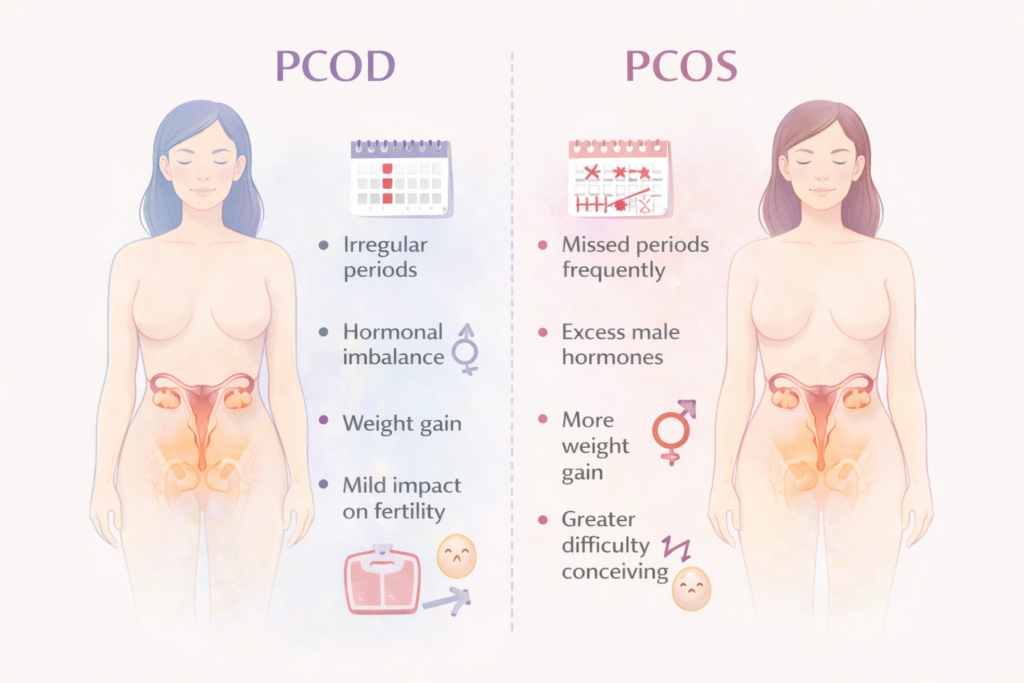
Understanding the difference between PCOD and PCOS is one of the most empowering steps a woman can take toward managing her health, hormones, and confidence.
In simple terms, this blog explains PCOD vs PCOS without medical jargon. As a result, you can clearly understand what’s happening in your body and, more importantly, what you can do about it.
First, You’re Not Alone
Before we dive in, this needs to be said clearly:
👉 PCOD and PCOS are common—and manageable.
Millions of women across the world live healthy, fulfilling lives with these conditions. A diagnosis does not define your worth, femininity, or future.
What matters most is awareness, consistency, and self-care.
What Is PCOD?
PCOD stands for Polycystic Ovarian Disease.
It is a condition where the ovaries release immature or partially mature eggs, which later turn into cysts.
PCOD is primarily a lifestyle-related hormonal imbalance.
Key features of PCOD:
- Ovaries may become enlarged
- Hormonal imbalance occurs
- Periods may be irregular
- Weight gain is common
- Acne and hair fall may occur
The good news?
👉 PCOD is usually reversible with lifestyle changes.
What Is PCOS?
PCOS stands for Polycystic Ovary Syndrome.
It is a more complex hormonal and metabolic disorder, often linked to insulin resistance.
PCOS affects not just the ovaries, but also:
- Hormones
- Metabolism
- Blood sugar levels
- Fertility
Key features of PCOS:
- Excess androgen (male hormones)
- Irregular or absent ovulation
- Missed periods
- Difficulty conceiving
- Higher risk of diabetes and heart issues
PCOS requires long-term management, not quick fixes.
PCOD vs PCOS: The Core Difference
Although symptoms may overlap, the root cause and severity are different.
PCOD:
- More common
- Less severe
- Lifestyle-driven
- Often reversible
PCOS:
- Less common but more serious
- Metabolic + hormonal disorder
- Long-term condition
- Needs consistent medical and lifestyle care
PCOD vs PCOS: Side-by-Side Comparison
| Factor | PCOD | PCOS |
|---|---|---|
| Nature | Ovarian disorder | Hormonal & metabolic syndrome |
| Severity | Mild to moderate | More severe |
| Ovulation | Mostly regular | Often irregular or absent |
| Weight gain | Common | Very common |
| Fertility impact | Mild | Significant |
| Insulin resistance | Rare | Common |
| Reversibility | Often reversible | Manageable, not curable |
Common Symptoms Women Experience
Many women dismiss early signs, thinking they’re “normal.” They’re not.
Symptoms seen in both PCOD & PCOS:
- Irregular periods
- Acne and oily skin
- Hair fall or thinning
- Weight gain, especially around the belly
- Mood swings and anxiety
- Fatigue
More common in PCOS:
- Facial hair or excess body hair
- Difficulty conceiving
- Dark patches on neck or underarms
- Sugar cravings
Emotional Impact: What No One Talks About
Beyond physical symptoms, PCOD and PCOS can deeply affect a woman emotionally.
Many women feel:
- Frustrated with their body
- Guilty about weight gain
- Anxious about fertility
- Unheard or dismissed by others
If you’ve felt this way, your feelings are valid.
Hormonal imbalances affect the brain as much as the body.
Healing starts when we stop blaming ourselves.
Can You Get Pregnant with PCOD or PCOS?
Yes.
👉 Most women with PCOD conceive naturally.
👉 Women with PCOS can also conceive, sometimes with medical support.
Early diagnosis, lifestyle changes, and proper guidance make a huge difference.
A diagnosis is not the end of motherhood dreams.
Lifestyle Changes That Truly Help
Whether you have PCOD or PCOS, lifestyle plays a powerful role.
What helps:
- Balanced meals with protein and fiber
- Regular physical activity (even walking helps)
- Stress management
- Good sleep routine
- Consistency over perfection
Small changes done daily matter more than extreme routines.
Medical Treatment: When Is It Needed?
- PCOD often improves with lifestyle changes alone
- PCOS may require:
- Hormonal regulation
- Insulin management
- Fertility support if needed
Always consult a qualified doctor—avoid self-medication or internet trends.
Final Thoughts: Know Your Body, Own Your Health
PCOD and PCOS are not labels to fear—they are signals from your body asking for care.
The moment you understand the difference, you stop feeling confused and start feeling empowered.
You are not “broken.”
You are learning how your body works.
And that knowledge is powerful.