

Vitamin D is often called the “sunshine vitamin”, yet it remains one of the most common nutritional deficiencies worldwide—especially in India. Despite abundant sunlight, millions of people suffer silently from low vitamin D levels without realizing it.
If you are often feeling tired, experience body aches, fall sick frequently, or notice unexplained mood changes, your body may be sending warning signals of vitamin D deficiency.
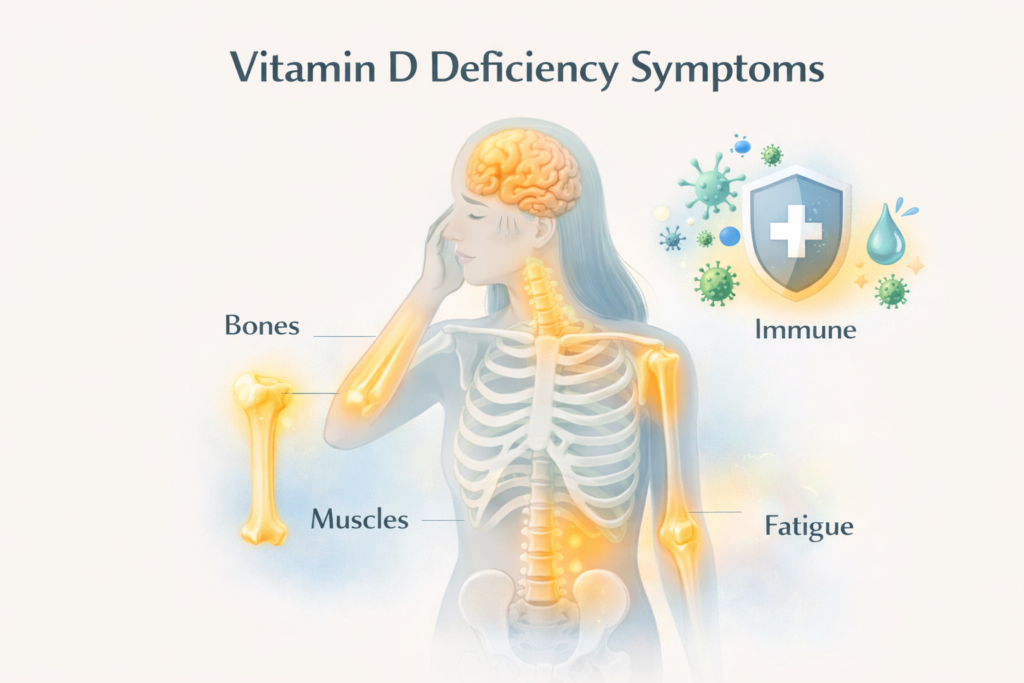
In this blog, we’ll break down the most common vitamin D deficiency symptoms, why they occur, who is at risk, and how to fix the deficiency safely and effectively.
What Is Vitamin D and Why Is It So Important?
Vitamin D is a fat-soluble vitamin that plays a vital role in multiple body functions. Unlike other vitamins, your body can produce vitamin D when your skin gets exposure to sunlight.
Key roles of vitamin D:
- Helps absorb calcium and phosphorus
- Strengthens bones and teeth
- Supports immune system function
- Improves muscle strength
- Regulates mood and mental health
- Reduces inflammation
Without adequate vitamin D, even a balanced diet and exercise routine may not work optimally.
Why Vitamin D Deficiency Is So Common
Vitamin D deficiency has become increasingly common due to modern lifestyle habits.
Major reasons include:
- Limited sun exposure
- Indoor work culture
- Excessive sunscreen use
- Pollution blocking UV rays
- Poor dietary intake
- Darker skin (needs more sun exposure)
- Obesity and poor absorption
- Certain medical conditions
As a result, many people remain deficient without obvious symptoms—until the deficiency worsens.
12 Common Vitamin D Deficiency Symptoms
1. Constant Fatigue and Low Energy
Feeling tired even after adequate sleep is one of the earliest signs of vitamin D deficiency. Low vitamin D levels affect cellular energy production, making you feel drained throughout the day.
2. Bone Pain and Back Pain
Vitamin D helps the body absorb calcium. When levels are low, bones become weak and painful, especially in the lower back, hips, and legs.
Chronic back pain is often misdiagnosed but may be linked to vitamin D deficiency.
3. Muscle Weakness and Cramps
Frequent muscle cramps, weakness, or difficulty climbing stairs can indicate low vitamin D. This deficiency reduces muscle strength and increases the risk of falls, especially in older adults.
4. Frequent Infections or Falling Sick Often
Vitamin D plays a critical role in immune function. If you catch colds, flu, or infections frequently, low vitamin D may be weakening your immune defense.
5. Hair Fall and Hair Thinning
Severe hair fall, especially in women, can be associated with vitamin D deficiency. Vitamin D supports hair follicle health, and low levels may trigger hair thinning.
6. Mood Changes, Anxiety, or Depression
Vitamin D affects brain chemicals like serotonin. Low levels have been linked to:
- Depression
- Mood swings
- Anxiety
- Irritability
Seasonal depression is also commonly associated with reduced vitamin D.
7. Slow Wound Healing
If cuts and wounds take longer to heal, vitamin D deficiency could be a factor. Vitamin D supports tissue repair and reduces inflammation.
8. Bone Loss and Weak Bones
Long-term vitamin D deficiency can lead to:
- Osteopenia
- Osteoporosis
- Increased fracture risk
This is especially dangerous for postmenopausal women and older adults.
9. Joint Pain and Stiffness
Unexplained joint pain or stiffness—especially in knees and shoulders—may be related to inflammation caused by low vitamin D levels.
10. Weight Gain and Difficulty Losing Weight
Vitamin D plays a role in fat metabolism and hormone regulation. Deficiency may slow metabolism and make weight loss more difficult, even with diet and exercise.
11. Poor Sleep Quality
Low vitamin D levels can affect sleep cycles, leading to:
- Difficulty falling asleep
- Poor sleep quality
- Daytime sleepiness
Good sleep and vitamin D levels are closely connected.
12. Brain Fog and Poor Concentration
If you struggle with focus, memory, or mental clarity, vitamin D deficiency may be affecting cognitive function.
Who Is at Higher Risk of Vitamin D Deficiency?
Certain groups are more prone to deficiency:
- Office workers and indoor professionals
- People with minimal sun exposure
- Older adults
- People with darker skin tones
- Overweight or obese individuals
- Pregnant and breastfeeding women
- People with digestive disorders
How Is Vitamin D Deficiency Diagnosed?
The most accurate way to check vitamin D levels is a blood test called 25-hydroxyvitamin D test.
Vitamin D levels:
- Deficient: Below 20 ng/mL
- Insufficient: 20–30 ng/mL
- Sufficient: 30–50 ng/mL
Always consult a doctor before starting supplements.
Best Natural Sources of Vitamin D
Sunlight (Most Important)
- 15–30 minutes of sun exposure
- Mid-morning or early afternoon
- Arms and face uncovered
Food Sources:
- Fatty fish (salmon, sardines)
- Egg yolk
- Fortified milk and cereals
- Mushrooms (sun-exposed)
Diet alone is often not enough, but it helps support levels.
Vitamin D Supplements: Are They Necessary?
Supplements are often required when:
- Levels are severely low
- Limited Sun exposure
- Absorption issues exist
However, excess vitamin D can be harmful, so supplementation should always be guided by a healthcare professional.
How Long Does It Take to Correct Deficiency?
- Mild deficiency: 6–8 weeks
- Moderate to severe deficiency: 3–6 months
Consistency matters more than dosage alone.
Final Thoughts
Vitamin D deficiency is common, silent, and often overlooked—but its impact on health is significant. From weak bones and low immunity to mood disorders and chronic fatigue, low vitamin D can affect your quality of life in multiple ways.
Recognizing the symptoms early and taking the right steps can help you to restore balance, energy, and overall well-being.
If you suspect a deficiency, don’t ignore the signs—your body is asking for attention.