

Introduction
Magnesium rarely gets the spotlight the way calcium or vitamin D does, yet it quietly powers hundreds of processes in your body. It helps your muscles contract and relax, keeps your heartbeat steady, supports nerve signaling, and even plays a role in how your body manages blood sugar and blood pressure. Despite how essential it is, magnesium deficiency is more common than most people realize, and it can develop silently over months before symptoms become obvious.
The tricky part is that magnesium deficiency doesn’t always announce itself clearly. Early signs can be subtle — a bit of fatigue here, a muscle cramp there — and it’s easy to brush them off as everyday tiredness. Left unaddressed, though, low magnesium levels can start affecting sleep, mood, bone health, and heart rhythm. This article breaks down what causes magnesium deficiency, how to recognize it, how it’s diagnosed and treated, and which foods can help you stay on top of your levels naturally.
Symptoms
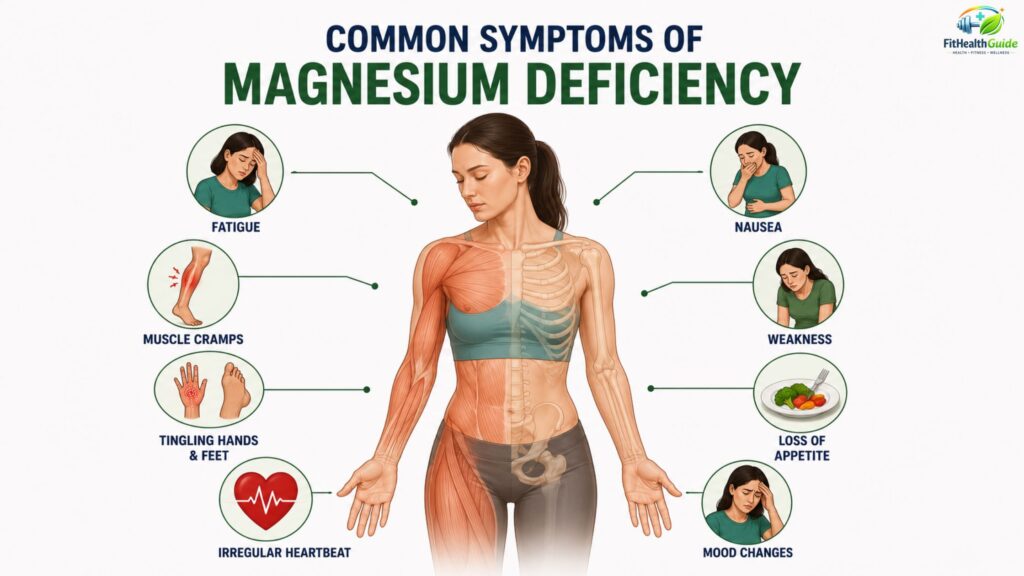
Magnesium deficiency tends to develop gradually, and its symptoms often overlap with general fatigue or stress, which is why it’s frequently overlooked.
Early symptoms include:
- Loss of appetite
- Nausea or occasional vomiting
- Unexplained fatigue and low energy
- General muscle weakness
If magnesium levels continue to drop, more noticeable symptoms can appear, such as:
- Numbness or tingling sensations in the hands and feet
- Muscle cramps and involuntary muscle contractions
- Increased irritability or personality changes
- Abnormal heart rhythms
- In severe cases, seizures
Severe, prolonged deficiency can also disturb the balance of other minerals in the body, sometimes leading to low calcium or low potassium levels, which can intensify muscle and heart-related symptoms.
Causes
For most healthy people who eat a reasonably varied diet, the kidneys are quite good at conserving magnesium, so deficiency from diet alone is uncommon. That said, several factors can tip the balance:
- Chronically low dietary intake, especially diets heavy in processed and refined foods
- Gastrointestinal conditions such as Crohn’s disease or celiac disease that interfere with absorption
- Chronic diarrhea or long-term malabsorption issues
- Excessive alcohol use, which affects both absorption and kidney retention of magnesium
- Poorly controlled diabetes, which can increase magnesium loss through urine
- Long-term use of certain medications, including diuretics, proton pump inhibitors, and some antibiotics
- Aging, since magnesium absorption tends to decline and kidney excretion tends to increase with age
Risk Factors
Certain groups are more likely to experience magnesium deficiency than others:
- Older adults, due to reduced absorption and higher medication use
- People with type 2 diabetes, particularly those with poor blood sugar control
- Individuals with digestive disorders affecting nutrient absorption
- People who regularly consume large amounts of alcohol
- Those on long-term diuretic or acid-reflux medication
- People with consistently poor dietary habits, particularly diets low in vegetables, whole grains, nuts, and legumes
- Pregnant or breastfeeding women, whose magnesium requirements are higher
Diagnosis
Magnesium levels aren’t part of routine blood work in everyday checkups. Doctors usually order testing when a person shows relevant symptoms or has a condition known to affect magnesium balance, such as unexplained muscle cramps, abnormal heart rhythms, or unresolved low calcium or potassium levels.
The most common diagnostic approach is a simple blood test measuring serum magnesium concentration. However, since most of the body’s magnesium is stored in bone and tissue rather than blood, a normal blood result doesn’t always rule out a deficiency at the cellular level. In more complex cases, doctors may look at the broader clinical picture, including symptoms, other electrolyte levels, and underlying conditions like kidney function or malabsorption disorders, rather than relying on a single number.
Treatment
Treatment depends on how severe the deficiency is and what’s causing it.
- Mild deficiency is usually treated with oral magnesium supplements, often alongside dietary changes to increase magnesium-rich foods.
- Moderate to severe deficiency, especially when symptoms like irregular heartbeat or seizures are present, may require magnesium given intravenously in a hospital setting for faster correction.
- Underlying cause management is a key part of treatment. If a medication, digestive disorder, or alcohol use is driving the deficiency, addressing that root cause is necessary to prevent the problem from recurring.
- Monitoring is important, particularly for people with reduced kidney function, since magnesium is cleared by the kidneys and levels need to be tracked carefully during supplementation.
Supplementation should ideally be guided by a healthcare provider, since excessive magnesium intake — particularly from supplements rather than food — can cause its own issues, including diarrhea and stomach upset.
Prevention
Preventing magnesium deficiency largely comes down to consistent dietary habits rather than one-time fixes:
- Build meals around magnesium-rich whole foods rather than relying on processed options
- Moderate alcohol intake
- Manage underlying conditions like diabetes or digestive disorders with your doctor’s guidance
- Review long-term medications periodically with your doctor if you’re on diuretics or acid-reducing drugs
- Stay consistent with a balanced, varied diet rather than restrictive or fad eating patterns
- For those at higher risk (older adults, pregnant women, people with absorption issues), periodic checkups can help catch early changes before symptoms develop
Foods to Eat
Magnesium is naturally present in a wide variety of everyday foods, which makes it fairly manageable to boost through diet alone:
- Leafy greens: Spinach and other dark leafy vegetables
- Legumes: Beans, lentils, and chickpeas
- Nuts and seeds: Almonds, cashews, pumpkin seeds, and sunflower seeds
- Whole grains: Brown rice, whole wheat, oats, and quinoa
- Fatty fish: Salmon and mackerel
- Fruits: Avocados, bananas, and papaya
- Dairy: Milk and yogurt, in moderate amounts
- Dark chocolate: Cocoa with higher cacao content offers a meaningful magnesium boost
- Soy products: Tofu and edamame
Since fiber-rich foods often naturally contain magnesium, a diet built around whole, minimally processed ingredients tends to cover most people’s needs without supplements.
Foods to Avoid
No food needs to be eliminated entirely, but certain dietary patterns can work against healthy magnesium levels:
- Highly processed and refined foods, which strip away naturally occurring magnesium during processing
- Excess sugar and refined carbohydrates, which offer little nutritional value in exchange for calories
- Excessive alcohol consumption, which interferes with magnesium absorption and increases its loss through urine
- Very high caffeine intake, which in excess may mildly increase magnesium excretion
- Diets low in vegetables, whole grains, and legumes, since these are primary dietary sources of magnesium
The goal isn’t strict avoidance but shifting the overall balance of your diet toward whole foods.
FAQs
1. What is the recommended daily intake of magnesium for adults?
Adult requirements generally range between roughly 310–320 mg per day for women and 400–420 mg per day for men, though exact needs vary by age and life stage such as pregnancy.
2. Can magnesium deficiency cause anxiety or mood changes?
Yes, low magnesium levels have been associated with irritability and mood changes, since magnesium plays a role in nerve function and neurotransmitter regulation.
3. Is magnesium deficiency common in healthy people?
It’s relatively uncommon in healthy individuals eating a varied diet, since the kidneys are efficient at conserving magnesium. It becomes more likely with certain health conditions, medications, or poor dietary habits.
4. Can I get enough magnesium from food alone?
For most people, yes. A diet rich in leafy greens, nuts, seeds, legumes, and whole grains can meet daily magnesium needs without supplementation.
5. What health conditions are linked to long-term low magnesium?
Chronic low magnesium has been associated with increased risk of cardiovascular issues, migraine, and disrupted calcium and potassium balance, though research in several areas is still ongoing.
6. How is magnesium deficiency diagnosed?
Primarily through a blood test measuring serum magnesium, often ordered when symptoms or risk factors are present, since routine checkups don’t usually include this test by default.
7. Are magnesium supplements safe for everyone?
Not necessarily. People with reduced kidney function need medical supervision before taking magnesium supplements, as their bodies may not clear excess magnesium efficiently.
8. Can certain medications cause magnesium deficiency?
Yes, long-term use of diuretics, proton pump inhibitors, and certain antibiotics has been linked to lower magnesium levels over time.
Conclusion
Magnesium may not get as much attention as other nutrients, but its role in muscle function, nerve health, and heart rhythm makes it worth paying attention to. For most people, a varied diet built around leafy greens, whole grains, nuts, seeds, and legumes is enough to maintain healthy levels without needing supplements. The key is recognizing early signs like fatigue, cramps, or low appetite before they progress, particularly if you fall into a higher-risk group such as older adults, people with digestive conditions, or those on long-term medication. When in doubt, a simple conversation with your doctor and a blood test can clarify where you stand — and small, consistent dietary changes are usually enough to keep magnesium levels where they should be.
References
- National Institutes of Health, Office of Dietary Supplements — Magnesium: Fact Sheet for Health Professionals (ods.od.nih.gov)
- National Institutes of Health, Office of Dietary Supplements — Magnesium: Fact Sheet for Consumers (ods.od.nih.gov)
- Mayo Clinic — Magnesium Deficiency (mayoclinic.org)
- Cleveland Clinic — Hypomagnesemia: What It Is, Causes, Symptoms & Treatment (my.clevelandclinic.org)