

Introduction
Fatty liver is a condition in which excess fat builds up inside the liver cells, making it harder for this vital organ to do its job of filtering toxins, processing nutrients, and producing essential proteins. Also known as steatotic liver disease, fatty liver has become one of the most common liver conditions worldwide, affecting people who drink little to no alcohol as well as those who drink heavily. In its early stages, fatty liver rarely causes noticeable symptoms, which is why many people live with it for years without knowing. Left unmanaged, however, fatty liver can progress to inflammation, scarring (fibrosis), and even cirrhosis or liver failure. The encouraging news is that fatty liver is often reversible, especially when caught early and managed through diet, weight loss, and lifestyle changes. This article explains the symptoms, causes, risk factors, diagnosis, treatment, and prevention of fatty liver, along with the best foods to eat and avoid.
Symptoms
Fatty liver is often called a “silent” condition because most people experience no symptoms at all in the early stages. When symptoms do appear, they tend to be vague and easy to overlook. Common signs of fatty liver include:
- Fatigue or a general feeling of tiredness
- Discomfort or a dull ache in the upper right side of the abdomen, where the liver is located
- Unexplained weight loss or loss of appetite
- Weakness
As fatty liver progresses to a more advanced stage, such as nonalcoholic steatohepatitis (NASH) with fibrosis or cirrhosis, additional symptoms may develop, including:
- Yellowing of the skin and eyes (jaundice)
- Swelling in the abdomen (ascites) or legs
- Itchy skin
- Confusion or difficulty concentrating
- Easy bruising or bleeding
- An enlarged liver or spleen that a doctor may detect during a physical exam
Because symptoms are often absent or mild until the disease has advanced, routine blood tests and check-ups play an important role in catching fatty liver early.
Causes
Fatty liver develops when the liver stores more fat than it can process. There are two broad categories of fatty liver disease:
1. Alcohol-associated liver disease (ALD): Caused by heavy or long-term alcohol consumption, which interferes with the liver’s ability to break down fats.
2. Nonalcoholic fatty liver disease (NAFLD), also called metabolic dysfunction-associated steatotic liver disease (MASLD): Occurs in people who drink little to no alcohol. This is the more common form today and is closely tied to metabolic health.
Within NAFLD, there are two subtypes:
- Nonalcoholic fatty liver (NAFL): Fat is present in the liver, but there is little to no inflammation or liver cell damage.
- Nonalcoholic steatohepatitis (NASH): Fat buildup is accompanied by inflammation, which can lead to fibrosis, cirrhosis, and liver cancer over time.
Other, less common causes of fatty liver include certain medications (such as corticosteroids and some chemotherapy drugs), rapid weight loss, malnutrition, pregnancy-related liver disease, and genetic or metabolic disorders that affect how the body processes fat.
Risk Factors
Several health conditions and lifestyle factors increase the likelihood of developing fatty liver:
- Obesity or being overweight, particularly excess fat around the abdomen
- Type 2 diabetes or insulin resistance
- High cholesterol or high triglycerides, including high LDL (“bad”) cholesterol and low HDL (“good”) cholesterol
- Metabolic syndrome, a cluster of conditions including high blood pressure, high blood sugar, and abnormal cholesterol levels
- Heavy alcohol consumption
- Rapid weight loss or certain weight-loss surgeries
- Sedentary lifestyle and lack of physical activity
- Age, as risk increases with advancing age
- Genetics, since certain gene variants make some people more prone to fat accumulation in the liver
- Underactive thyroid (hypothyroidism) and polycystic ovary syndrome (PCOS)
- Sleep apnea
Having one or more of these risk factors doesn’t guarantee a person will develop fatty liver, but it does mean regular health screening is important.
Diagnosis
Because fatty liver often has no symptoms, it’s frequently discovered during routine testing for other conditions. Doctors typically use a combination of the following methods to diagnose fatty liver:
- Blood tests: Elevated liver enzymes (such as ALT and AST) on a liver function test can be an early clue, though normal enzyme levels don’t rule out fatty liver.
- Imaging tests: Ultrasound is often the first imaging test used to check for fat in the liver. CT scans and MRI can provide more detailed images, while specialized techniques like FibroScan (transient elastography) measure liver stiffness to estimate scarring.
- Liver biopsy: In some cases, a small tissue sample is taken from the liver and examined under a microscope. This is the most definitive way to confirm inflammation, fat content, and the extent of fibrosis, particularly to distinguish NAFL from NASH.
- Medical history and physical exam: Doctors will ask about alcohol use, medications, family history, and weight changes, and may check for an enlarged liver during a physical exam.
Additional blood tests may be ordered to rule out other causes of liver disease, such as viral hepatitis or autoimmune liver conditions.
Treatment
There is currently no single medication approved specifically to cure fatty liver, so treatment focuses on managing the underlying causes and risk factors. Common treatment approaches include:
- Weight loss: Losing even a modest amount of weight can meaningfully reduce fat in the liver. Studies show that losing 3% to 5% of body weight can reduce liver fat, while losing 7% to 10% can help reduce inflammation and fibrosis.
- Managing underlying conditions: Controlling blood sugar, cholesterol, and blood pressure through medication and lifestyle changes helps protect the liver.
- Avoiding alcohol: For all types of fatty liver, cutting back on or eliminating alcohol reduces additional stress on the liver.
- Physical activity: Regular exercise helps reduce liver fat even without significant weight loss.
- Medications: In select cases, doctors may prescribe medications such as vitamin E (for certain non-diabetic patients) or diabetes medications that have shown benefits for liver fat, depending on individual health needs.
- Bariatric (weight-loss) surgery: For people with severe obesity, this may be considered to support long-term weight loss and liver health.
- Regular monitoring: Routine blood tests and imaging help track liver health over time and catch any progression early.
Because fatty liver management is highly individual, it’s important to work closely with a healthcare provider to build a treatment plan suited to your specific risk factors and stage of disease.
Prevention
Many cases of fatty liver, especially the nonalcoholic type, can be prevented or slowed down through consistent lifestyle habits:
- Maintain a healthy body weight through a balanced diet and regular exercise
- Limit or avoid alcohol consumption
- Keep blood sugar, cholesterol, and blood pressure within healthy ranges
- Exercise regularly, aiming for at least 150 minutes of moderate activity per week
- Avoid crash diets or extremely rapid weight loss, which can sometimes worsen liver fat
- Stay up to date with routine health check-ups, especially if you have diabetes, obesity, or a family history of liver disease
- Be cautious with medications and supplements that can strain the liver, and consult a doctor before starting new ones
- Get adequate sleep and manage conditions like sleep apnea
Foods to Eat
A liver-friendly diet plays a central role in both preventing and managing fatty liver. Helpful foods include:
- Vegetables and leafy greens: Spinach, broccoli, and other vegetables are rich in fiber and antioxidants that support liver function.
- Whole grains: Oats, brown rice, and whole wheat provide fiber that helps regulate blood sugar and cholesterol.
- Fatty fish: Salmon, sardines, and mackerel are rich in omega-3 fatty acids, which may help reduce liver fat and inflammation.
- Nuts and seeds: Walnuts and flaxseeds offer healthy fats and have been linked to improved liver enzyme levels.
- Olive oil: A source of healthy monounsaturated fat that may help reduce liver fat when used in place of saturated fats.
- Fruits: Berries, apples, and citrus fruits provide fiber and antioxidants, though those with diabetes should watch portion sizes due to natural sugars.
- Legumes: Beans, lentils, and chickpeas are high in fiber and plant protein, supporting healthy weight management.
- Coffee (in moderation): Some research associates moderate coffee consumption with a lower risk of liver fibrosis, though this should be discussed with a doctor.
- Lean protein: Skinless poultry, tofu, and low-fat dairy support muscle health without adding excess saturated fat.
- Water: Staying well hydrated supports overall metabolic and liver function.
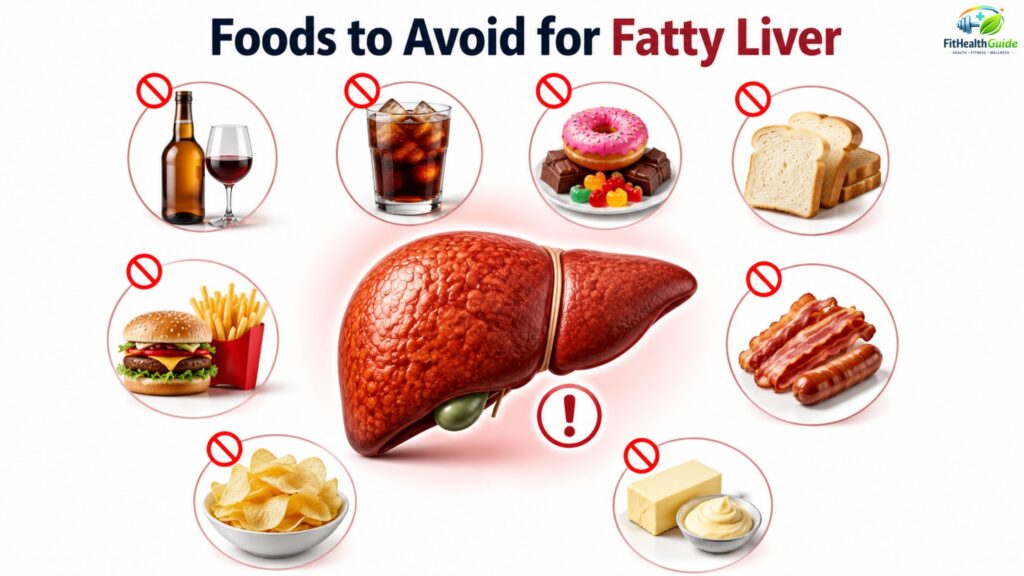
Foods to Avoid
Certain foods and drinks can worsen fat accumulation in the liver and should be limited or avoided:
- Alcohol: Directly contributes to fat buildup and liver cell damage.
- Sugary drinks and foods: Soda, packaged juices, and sweets high in fructose can increase liver fat.
- Refined carbohydrates: White bread, white rice, and pastries can spike blood sugar and contribute to fat storage in the liver.
- Fried and fast foods: High in unhealthy trans fats and calories, which promote weight gain and liver fat.
- Red and processed meats: Sausages, bacon, and fatty cuts of red meat are high in saturated fat.
- Excess salt: High-sodium foods can contribute to fluid retention and are linked to higher risk of liver complications.
- Full-fat dairy and butter in excess: These are high in saturated fat, which can worsen cholesterol levels.
- Highly processed snack foods: Chips, packaged snacks, and baked goods often contain unhealthy fats and added sugars.
FAQs
1. Is fatty liver disease reversible?
Yes, in many cases, especially in the early stages. Weight loss, dietary changes, exercise, and avoiding alcohol can reduce liver fat and, in some cases, reverse damage before it progresses to cirrhosis.
2. Can fatty liver occur in people who don’t drink alcohol?
Yes. Nonalcoholic fatty liver disease (NAFLD) develops in people who drink little to no alcohol and is strongly linked to obesity, diabetes, and metabolic syndrome.
3. What is the difference between NAFLD and NASH?
NAFLD is the broader term for fat buildup in the liver without significant alcohol use. NASH (nonalcoholic steatohepatitis) is a more serious subtype involving inflammation and liver cell damage, which can progress to fibrosis or cirrhosis.
4. How much weight loss is needed to improve fatty liver?
Losing 3% to 5% of body weight can reduce liver fat, while losing 7% to 10% may be needed to reduce inflammation and fibrosis, according to research cited by health authorities.
5. Can fatty liver cause serious complications?
Yes. If left unmanaged, fatty liver can progress to inflammation, fibrosis, cirrhosis, liver failure, and in some cases liver cancer.
6. What tests are used to diagnose fatty liver?
Doctors commonly use blood tests to check liver enzymes, imaging tests like ultrasound or MRI, and sometimes a liver biopsy to confirm the diagnosis and assess severity.
7. Is coffee good for the liver?
Some studies suggest that moderate coffee consumption may be associated with a lower risk of liver fibrosis, but it’s best to discuss your specific situation with a healthcare provider.
8. Can exercise alone help fatty liver without weight loss?
Yes, regular physical activity can help reduce liver fat even without significant weight loss, making it a valuable part of any management plan.
Conclusion
Fatty liver is a common but often overlooked condition that can quietly progress from simple fat buildup to more serious liver damage if left unaddressed. Because early-stage fatty liver rarely causes symptoms, understanding the risk factors and getting routine screenings are key to catching it early. The good news is that fatty liver responds well to lifestyle changes — a balanced diet rich in vegetables, whole grains, and healthy fats, combined with regular exercise, weight management, and limited alcohol intake, can help reduce liver fat and even reverse early damage. If you have risk factors such as obesity, diabetes, or high cholesterol, talk to your doctor about screening for fatty liver so you can take steps toward better liver health today.
References
- Mayo Clinic — Fatty Liver Disease (MASLD): Symptoms and Causes
- Cleveland Clinic — Steatotic (Fatty) Liver Disease: Symptoms & Treatment
- National Institute of Diabetes and Digestive and Kidney Diseases (NIDDK), NIH — Symptoms & Causes of NAFLD & NASH
- National Institute of Diabetes and Digestive and Kidney Diseases (NIDDK), NIH — Treatment for NAFLD & NASH
- National Institute of Diabetes and Digestive and Kidney Diseases (NIDDK), NIH — Definition & Facts of NAFLD & NASH
This article is for informational purposes only and is not a substitute for professional medical advice. Please consult a qualified healthcare provider for diagnosis and treatment of any liver condition.