

If you’ve ever tried to lose weight, chances are you’ve heard this question more than once:
“Should I do a low-carb diet or go keto?”
Both promise fat loss.
Both ask you to reduce carbs.
And yet, many people feel confused, frustrated, or even burned out after trying one—or both.
Here’s the honest truth most diet blogs skip:
Low-carb and keto are not the same—and choosing the wrong one for your body can backfire.
This blog explains the low-carb vs keto diet difference in simple, real-life terms, so you can make a decision that supports your body instead of fighting it.
First, Let’s Talk About Why This Confusion Exists
Social media has turned nutrition into extremes:
- “Carbs are bad.”
- “Keto is the fastest way to lose weight.”
- “If you eat rice, you’ll never lose fat.”
But weight loss is not about trends.
It’s about what your body can actually sustain.
Understanding the difference between low-carb and keto helps you avoid:
- Hormonal imbalance
- Energy crashes
- Rebound weight gain
- Mental exhaustion
What Is a Low-Carb Diet?
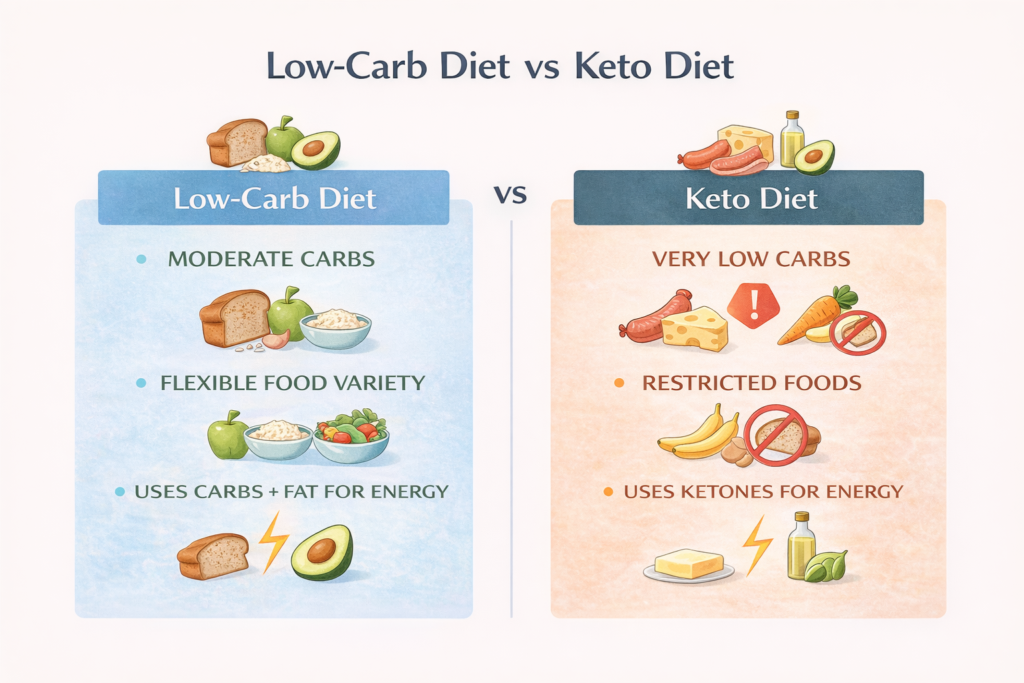
A low-carb diet simply means reducing carbohydrate intake while still allowing flexibility.
There is no strict carb limit.
Typical low-carb approach:
- Moderate carbs (80–150 g/day, sometimes more)
- Focus on whole foods
- Includes vegetables, fruits, legumes, and some grains
- Higher protein intake
- Balanced fats
How the body responds:
- Uses both carbs and fat for energy
- Blood sugar stabilizes
- Cravings reduce gradually
A low-carb diet works with your metabolism, not against it.
What Is a Keto Diet?
The keto diet (ketogenic diet) is far more restrictive.
Its goal is to push the body into ketosis, a metabolic state where fat becomes the primary fuel source.
Typical keto approach:
- Very low carbs (20–50 g/day)
- High fat intake
- Moderate protein
- Almost no grains, fruits, or legumes
How the body responds:
- Shifts from glucose to ketones for energy
- Rapid initial weight loss (mostly water)
- Appetite suppression for some people
Keto is a metabolic intervention, not just a diet.
Low-Carb vs Keto: The Core Difference
Here’s the simplest way to understand it:
- Low-carb = reduction
- Keto = elimination
Low-carb allows flexibility.
Keto demands precision.
Low-Carb Diet vs Keto Diet: Side-by-Side Comparison
| Factor | Low-Carb Diet | Keto Diet |
|---|---|---|
| Carb intake | Reduced | Extremely low |
| Flexibility | High | Very low |
| Food variety | Wider | Limited |
| Ketosis | Not required | Required |
| Sustainability | Long-term | Short-term for many |
| Social life | Easier | Challenging |
| Energy levels | Stable | Can fluctuate |
| Risk of rebound | Lower | Higher if stopped suddenly |
The Truth About Weight Loss on Both Diets
Here’s something important most people don’t realize:
Both diets cause weight loss mainly by reducing calories—not by magic.
Why keto feels faster:
- Rapid water weight loss
- Appetite suppression
- Reduced bloating
Why low-carb feels slower:
- Gradual fat loss
- More stable hormones
- Easier adherence
Fast results feel exciting—but slow, steady results last longer.
Emotional Reality: Why Many People Quit Keto
Let’s be real.
Many people quit keto because:
- Food feels restrictive
- Social eating becomes stressful
- Energy crashes appear
- Hormonal symptoms show up (especially in women)
- Fear of carbs develops
This doesn’t mean keto is “bad.”
It means it’s not meant for everyone.
Which Diet Is Better for Women?
For many women, especially those with:
- Hormonal imbalance
- PCOS
- Thyroid issues
- High stress levels
Low-carb often works better than keto.
Women’s bodies are more sensitive to extreme restriction. Chronic low carbs can increase cortisol and disrupt cycles.
Who May Benefit from Keto?
Keto may be helpful if:
- You have insulin resistance
- You are medically supervised
- You can follow it short-term
- You understand re-feeding properly
Keto is a tool, not a lifestyle for everyone.
Sustainability: The Most Ignored Factor
Ask yourself this one question:
“Can I eat this way for the next 6–12 months without feeling miserable?”
If the answer is no, the diet will eventually fail—no matter how effective it looks on paper.
The best diet is the one you can stick to.
Common Mistakes People Make
- Choosing keto just because it’s trending
- Cutting carbs too fast
- Ignoring sleep and stress
- Thinking carbs are the enemy
- Switching diets repeatedly
Consistency matters more than perfection.
Final Thoughts: Choose Support, Not Punishment
Low-carb and keto are not competitions.
They are different paths for different bodies.
If a diet makes you anxious, exhausted, or afraid of food—it’s not the right one for you.
Weight loss works best when:
- You feel nourished
- You feel in control
- You feel calm, not stressed
Your body is not the problem.
The approach might be.