

Introduction
When it comes to weight loss and fat burning, one question comes up again and again: walking vs running? Some people prefer a brisk morning walk, while others lace up their running shoes and head straight for a jog. Both are cardio exercises and both burn calories, but their fat-burning effects differ in important ways.
In this article, we’ll break down — with science-backed information — which exercise burns more fat, what the symptoms of excess body fat look like, what causes it, the risk factors involved, how to assess where you stand, treatment and prevention strategies, and what to eat (and avoid) so you can choose the right approach for your fitness goals.
Symptoms (Signs of Excess Body Fat)
Excess body fat usually shows up through a few clear signs. Recognizing them early can help you plan the right exercise routine in time:
- Fat accumulating around the belly, waist, and thighs
- Feeling tired quickly even with light activity
- Shortness of breath or difficulty climbing stairs
- Clothes feeling tighter, expanding waistline
- Poor sleep quality or snoring
- Joint pain, especially in the knees and lower back
- Low energy levels and constant sluggishness
If these symptoms persist, it’s a sign that it’s time to start a regular physical activity routine — whether that’s walking or running.
Causes (What Leads to Excess Fat Storage)
Excess body fat can build up for several reasons:
- Eating more calories than you burn: When calorie intake consistently exceeds what your body uses, the surplus gets stored as fat.
- Sedentary lifestyle: Long hours of sitting and minimal movement slow down metabolism.
- Poor sleep quality: Inadequate sleep disrupts hormones like cortisol and ghrelin, increasing hunger and fat storage.
- Processed and high-sugar foods: Junk food, sugary drinks, and refined carbs are major contributors to fat accumulation.
- Chronic stress: Ongoing stress raises cortisol levels, a common driver of fat storage around the abdomen.
- Genetics and age: Metabolism naturally slows with age, and family history also influences fat distribution.
- Hormonal changes: Thyroid issues or hormonal imbalances can also lead to weight gain.
Many of these causes are made worse by everyday habits that quietly sabotage progress without you realizing it. If you feel like you’re doing “everything right” but still not seeing results, check out our related guide: 10 Proven Fat Loss Mistakes That Are Stopping Your Weight Loss Progress — it breaks down the most common mistakes holding people back from real fat loss.
Risk Factors
Certain factors increase the likelihood of excess fat gain and obesity:
- Family history of obesity or diabetes
- Reduced physical activity after age 40
- A desk job or a largely sedentary lifestyle
- Regular consumption of junk food and sugary beverages
- Excessive alcohol intake
- Sleeping less than 6 hours a night
- Smoking, which affects both metabolism and appetite
- Postpartum weight gain after pregnancy
- Certain medications (such as steroids or antidepressants) that can cause weight gain
If two or three of these factors apply to you, adopting a structured exercise plan — whether walking vs running — becomes even more important.
Diagnosis (How to Know Which Exercise Is Right for You)
Before deciding whether walking or running suits you better, it helps to assess your current fitness level:
- Check your BMI (Body Mass Index): BMI is calculated by dividing weight (kg) by height squared (m²). A BMI of 25 or higher is considered overweight, and 30 or higher falls into the obesity category.
- Measure waist circumference: Fat stored around the abdomen is a strong indicator of health risk.
- Check resting heart rate and stamina: If you get breathless after a short walk, it’s better to start with walking before progressing to running.
- Assess joint and bone health: If you already have knee or back issues, consult a doctor before taking up running.
- Consult a doctor or fitness professional: Especially important if you’re above 40, pregnant, have a heart condition, or have been inactive for a long time.
This assessment will help you decide whether to start with low-impact walking or whether you can go straight into a running plan.
Treatment: Walking vs Running — Which Burns More Fat?
Now for the most important part — the actual comparison.
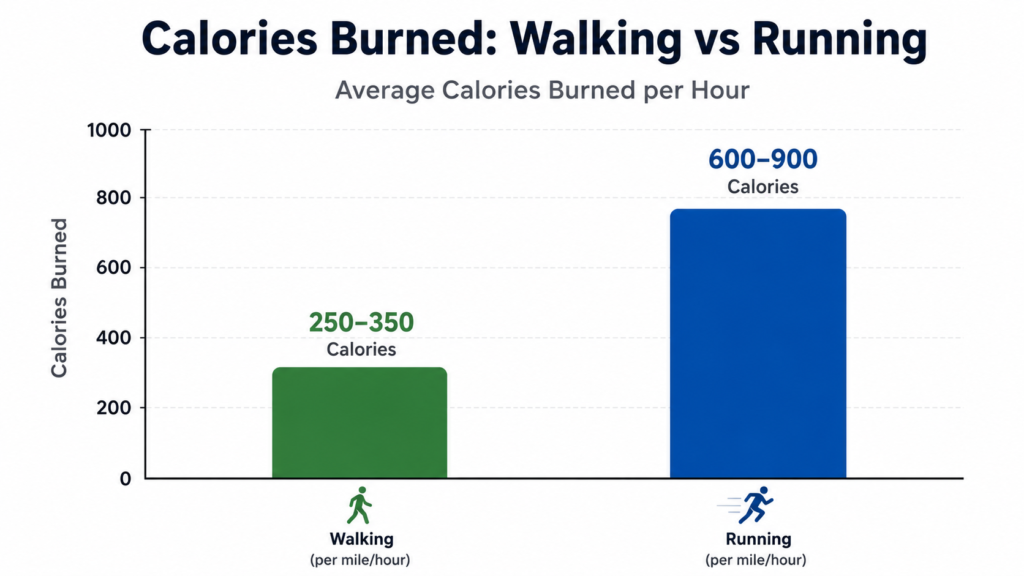
The Calorie Burn Difference
On average, running burns around 100 calories per mile, while walking burns roughly 80 calories per mile. However, running covers that same distance in much less time, so its per-minute calorie burn is significantly higher.
According to Dr. Callie M. Davies, a sports medicine physician at Mayo Clinic, running can burn up to three times as many calories per minute as walking, making it a more time-efficient choice for weight loss.
The Truth About the “Fat Burning Zone”
Many people believe walking burns more “fat” because at lower intensities, the body relies more heavily on fat as fuel. This is technically true, but according to a Mayo Clinic–based analysis, total calories burned matters more for weight loss than the percentage of fat used as fuel during exercise. In other words, if running burns more total calories overall, it also results in greater fat loss — even though the body is using more carbohydrates for fuel during the activity itself.
Long-Term Consistency
Running burns more calories because it’s a high-intensity activity that engages fast-twitch muscle fibers, but it puts more strain on the joints and can increase injury risk if overdone. On the other hand, adding just 30 minutes of brisk walking to your daily routine can burn roughly 150 extra calories a day, and because it’s gentler on the joints, it’s often easier to sustain long-term.
Bottom line: If your time is limited and your goal is fast fat loss, running is the more efficient option. If you’re a beginner, have weaker joints, or need something sustainable, walking can be just as powerful — it simply requires more time and duration.
The Best Approach
Most fitness experts agree that combining both is the smartest strategy — for example, 2–3 days of walking and 2–3 days of light jogging or running each week, paired with strength training to preserve muscle mass and keep your metabolism strong.
Prevention (Keeping Fat From Coming Back)
- Aim for at least 150 minutes of moderate activity (like brisk walking) or 75 minutes of vigorous activity (like running) per week — this is the official recommendation from the CDC’s Physical Activity Guidelines
- Add a few minutes of strength/resistance training daily
- Get 7–8 hours of sleep
- Limit processed and high-sugar foods
- Drink plenty of water and stay hydrated
- Manage stress through meditation, yoga, or hobbies
- Track weekly progress — step count or running distance
- Break up long periods of sitting with short walks (NEAT activity)
Foods to Eat (To Support Fat Loss)
- Protein-rich foods: Eggs, lentils, paneer/cottage cheese, chicken, fish — for muscle repair and satiety
- Fiber-rich vegetables: Spinach, broccoli, carrots, bottle gourd — low calorie, high nutrients
- Whole grains: Oats, brown rice, sorghum, millet — for steady energy
- Fruits: Apples, papaya, berries — natural sugars and vitamins
- Healthy fats: Nuts, seeds, olive oil, avocado — for hormone balance
- Green tea and black coffee (unsweetened): Give metabolism a mild boost
- Water and coconut water: For hydration and electrolyte balance
Foods to Avoid
- Sugary drinks, sodas, and packaged juices
- Deep-fried and oily snacks
- White bread and other refined-flour products
- Highly processed and packaged foods (high in sodium and preservatives)
- Excessive alcohol consumption
- Too much red meat and high-fat dairy
- Heavy meals late at night
FAQs
1. Is walking or running better for burning fat?
If your goal is to burn more calories in less time, running is the better option, since running burns roughly 100 calories per mile compared to about 80 for walking. However, if you have weak joints or are a beginner, consistent walking can still deliver effective fat-loss results.
2. Can you lose weight from walking alone?
Yes, but it works best combined with a healthy diet — a combination of physical activity and calorie control helps with weight management much more than exercise alone.
3. How long should you walk or run each day?
According to CDC guidelines, adults should aim for at least 150 minutes of moderate activity (walking) or 75 minutes of vigorous activity (running) per week, which can be split into 20–30 minutes a day.
4. Does running damage your joints?
If done with poor form or excessive intensity, running can put extra stress on the joints and increase the risk of injury, so proper footwear, warm-ups, and gradual progression are important.
5. Should beginners start with running right away?
No — beginners should start with brisk walking and gradually progress to jogging and then running, giving the body time to adapt.
6. How many days a week should you exercise for fat loss?
Five days a week, 30–45 minutes of activity (a mix of walking and running) is a solid starting point for fat loss and overall health.
7. Is fat loss possible without dieting, just through exercise?
Exercise helps create a calorie deficit, but for sustainable, healthy fat loss, controlling your diet is equally important. You can also check Easy home workout plan without equipment.
8. Is it good to do both walking and running?
Absolutely — combining the two (such as alternating walking and jogging days) adds variety, supports consistency, and delivers better overall fat-loss results.
Conclusion
Both walking and running are effective cardio exercises, and both support fat loss — the real difference lies in intensity, speed, and time. If your goal is to burn more calories in less time and your joints are healthy, running is the more efficient option. But if you’re a beginner, dealing with joint issues, or looking for a sustainable long-term habit, daily brisk walking can be just as powerful — as long as it’s paired with consistency and a healthy diet. The best approach is to balance both based on your body, fitness level, and lifestyle, and build a routine you can actually stick with over time.
References
NIH (National Institute of Diabetes and Digestive and Kidney Diseases) — Health Risks of Overweight & Obesity
Mayo Clinic Press — Running vs. walking: Which is right for you?
Mayo Clinic — Walking: Is it enough for weight loss?
Mayo Clinic News Network — Mayo Clinic Q and A: Running and weight loss
CDC — Adult Activity: An Overview, Physical Activity Basics
WHO — Obesity and overweight Fact Sheet
Cleveland Clinic — Walking vs. Running: Which Is Better for You?