

Let’s be honest — most of us don’t think about our gut until something goes wrong. The bloating after lunch, the fatigue that no amount of coffee can fix, the brain fog that clouds your Monday morning. Sound familiar? Here’s the thing: your gut might be whispering (or screaming) for help, and the good news is, improving gut health naturally is very much within your reach.
Gut health has officially gone mainstream — and for good reason. Scientists now call the gut the “second brain,” and the research backing that claim is piling up fast. Whether you’re dealing with digestive discomfort, low energy, or stubborn skin issues, chances are your gut microbiome has something to say about it.
This guide is your no-fluff, science-backed roadmap to a healthier gut — written in plain English, not medical jargon. Let’s dive in.
“All disease begins in the gut.” — Hippocrates said it 2,500 years ago. Modern science is finally catching up.
What Is Gut Health — And Why Does It Matter?
Your gut is home to trillions of microorganisms — bacteria, fungi, viruses — collectively known as the gut microbiome. These tiny organisms aren’t just passengers; they run critical operations in your body: digesting food, producing vitamins, regulating immunity, and even influencing your mental health through the gut-brain connection.
When your microbiome is balanced, you feel it: good energy, smooth digestion, clear skin, and a stable mood. When it’s off — hello, bloating, anxiety, inflammation, and a weakened immune system.
Quick Gut Facts Worth Knowing
- Your gut contains over 100 trillion microorganisms — more than cells in your body.
- 70% of your immune system lives in your gut lining.
- The gut produces 90% of the body’s serotonin — your “feel-good” hormone.
- A disrupted microbiome is linked to anxiety, obesity, type 2 diabetes, and autoimmune disease.
- Diet changes can shift your gut microbiome composition in as little as 3 days.
Signs Your Gut Health Needs Attention
Before we talk solutions, let’s talk signals. Your body is constantly communicating — the trick is learning to listen. Here are the most common signs of an unhealthy gut:
🫧
Bloating & Gas
Frequent bloating after meals is one of the earliest red flags of gut imbalance.
😴
Constant Fatigue
Poor gut health disrupts nutrient absorption, leaving you perpetually drained.
🧠
Brain Fog
Can’t focus? Your gut-brain axis may be sending distress signals upstairs.
🌿
Food Intolerances
New sensitivities to foods you once ate fine can signal a leaky gut.
😟
Mood Swings
Low serotonin production from an unhealthy gut can affect emotional stability.
💤
Poor Sleep
Disrupted melatonin production often traces back to gut dysfunction.
How to Improve Gut Health Naturally: 8 Proven Strategies
1. Eat a Diverse, Fibre-Rich Diet
If there’s one thing that consistently makes microbiome researchers excited, it’s dietary diversity. Eating a wide variety of whole foods — especially plants — feeds different strains of beneficial bacteria. Aim for high-fibre foods like lentils, chickpeas, oats, leafy greens, berries, and seeds. Fibre acts as a prebiotic — it literally feeds your good bacteria and helps them thrive.
A practical target: try to eat 30 different plant foods per week. It sounds like a lot, but herbs, spices, nuts, and seeds all count.
2. Load Up on Probiotic-Rich Foods
This is where probiotic foods for gut health shine. Fermented foods introduce live beneficial bacteria directly into your digestive tract. The all-stars include:
- Yoghurt — choose ones with live active cultures, no added sugar
- Kefir — a fermented milk drink, more potent than yoghurt
- Sauerkraut & Kimchi — fermented cabbage, rich in Lactobacillus
- Miso & Tempeh — fermented soy, great plant-based options
- Kombucha — fermented tea, a trendy but genuinely beneficial choice
3. Reduce Ultra-Processed Foods and Sugar
Ultra-processed foods — think packaged snacks, fast food, sugary drinks — are essentially kryptonite for your gut. They’re low in fibre, high in artificial additives, and feed the harmful bacteria in your gut while starving the beneficial ones. Excess sugar, in particular, promotes the growth of Candida and other opportunistic organisms that disrupt microbiome balance.
You don’t need to be perfect — just consistent. Reducing processed food and gut health impact starts with small, sustainable swaps.
4. Stay Hydrated
Water is underrated in the gut health conversation. Proper hydration keeps the mucosal lining of your intestines intact — which is crucial for preventing leaky gut syndrome. It also keeps things moving smoothly (literally). Aim for 6–8 glasses of water daily and remember: herbal teas, coconut water, and water-rich fruits also contribute.
Think of hydration as the maintenance crew for your gut lining — skimp on it, and the cracks start to show.
5. Manage Stress — Seriously
Chronic stress is one of the most underestimated gut destroyers. The gut-brain connection is bidirectional — stress signals from your brain travel directly to your gut, disrupting digestion, altering microbiome composition, and increasing intestinal permeability. Practices like mindfulness meditation, yoga, breathwork, and even journaling have been clinically shown to reduce gut inflammation markers.
Even 10 minutes of intentional breathing a day can make a measurable difference over weeks.
6. Prioritise Sleep Quality
Your gut microbiome operates on a circadian rhythm — and so does your digestive system. Poor or irregular sleep disrupts the diversity and balance of gut bacteria. Research shows that people who sleep fewer than 7 hours consistently have significantly less microbial diversity. Prioritise a regular sleep schedule, limit screen time before bed, and create a dark, cool sleeping environment. Sleep and gut health are more closely intertwined than most people realize.
7. Move Your Body Daily
Exercise isn’t just for your muscles — it’s medicine for your microbiome. Regular physical activity increases microbial diversity, stimulates the production of short-chain fatty acids (SCFAs), and reduces gut inflammation. You don’t need intense workouts; a brisk 30-minute walk daily can meaningfully improve gut bacteria diversity over time. Exercise for gut health is one of the most accessible tools in your arsenal.
8. Be Mindful with Antibiotics
Antibiotics save lives — but they’re also indiscriminate. They wipe out harmful and beneficial bacteria. If you genuinely need antibiotics, take them as prescribed — but support your recovery by eating plenty of probiotic and prebiotic foods before, during, and after the course. Always consult your doctor before stopping or skipping a prescribed course.
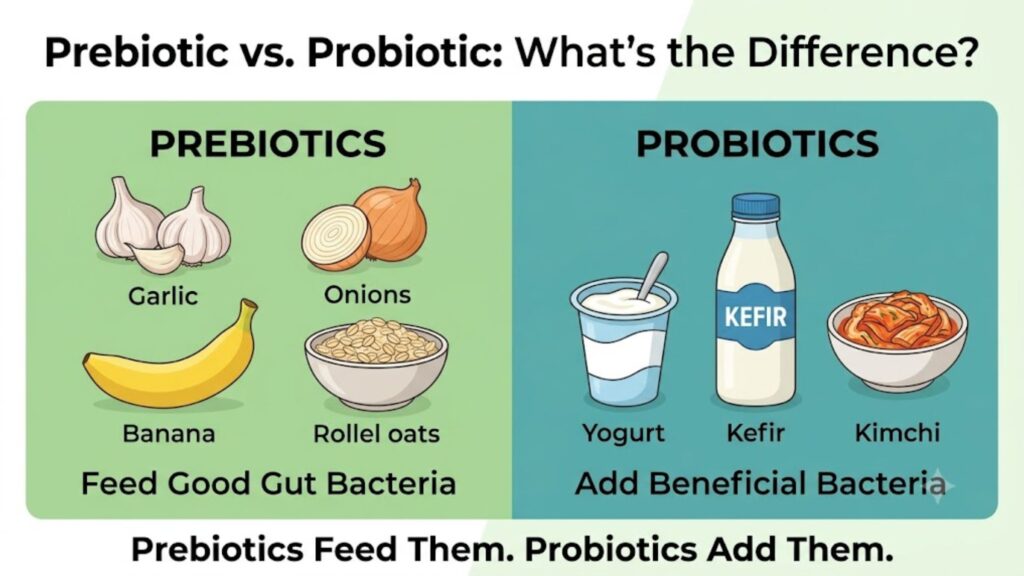
Prebiotic vs. Probiotic: What’s the Difference?
These two words get mixed up constantly. Here’s the simple breakdown:
Prebiotics vs. Probiotics
- Prebiotics — Non-digestible fibres that feed good bacteria. Found in garlic, onions, leeks, bananas, asparagus, and oats.
- Probiotics — Live beneficial bacteria you consume. Found in fermented foods (yoghurt, kefir, kimchi) or supplements.
- Synbiotics — Products that combine both prebiotics and probiotics for synergistic effect.
- Postbiotics — The beneficial byproducts that probiotics produce (like SCFAs). Emerging area of research.
For best results, focus on getting both prebiotic and probiotic foods from your diet before reaching for supplements. Food-first is always the smarter strategy.
Frequently Asked Questions About Gut Health
Q: How long does it take to improve gut health naturally?
Research suggests that dietary changes can begin shifting your microbiome composition within 3–5 days. However, meaningful, lasting improvement in gut health typically takes 4–8 weeks of consistent healthy habits.
Q: Can gut health affect mental health?
Absolutely. The gut produces roughly 90% of the body’s serotonin. An imbalanced microbiome is linked to higher rates of anxiety, depression, and mood instability through the gut-brain axis — a two-way communication highway between your digestive system and your brain.
Q: What foods are worst for gut health?
Ultra-processed foods, refined sugars, artificial sweeteners (especially aspartame and sucralose), alcohol, and fried foods are the biggest culprits. They reduce microbial diversity, promote inflammation, and can damage the gut lining over time.
Q: Is leaky gut real?
Yes — scientifically called “intestinal permeability,” leaky gut refers to a damaged gut lining that allows partially digested food particles and toxins to enter the bloodstream. It’s associated with autoimmune conditions, chronic inflammation, and food sensitivities.
Q: Should I take a probiotic supplement?
Probiotic supplements can be helpful, especially after antibiotic use or during a period of dietary disruption. However, they’re no substitute for a diverse, whole-food diet. If you choose a supplement, look for multi-strain formulas with at least 10 billion CFU and clinically validated strains like Lactobacillus and Bifidobacterium.
Final Thoughts: Your Gut, Your Superpower
Here’s the bottom line — improving your gut health naturally doesn’t require expensive supplements, extreme diets, or complicated routines. It asks for consistency over perfection: eat diverse whole foods, add fermented foods to your plate, move your body, sleep well, and stress less.
Small, daily choices compound into remarkable long-term results. Your gut microbiome is remarkably responsive — give it the right inputs, and it will reward you with better energy, sharper focus, stronger immunity, and a genuinely happier mood.
Start with one change this week. Your gut is already listening.